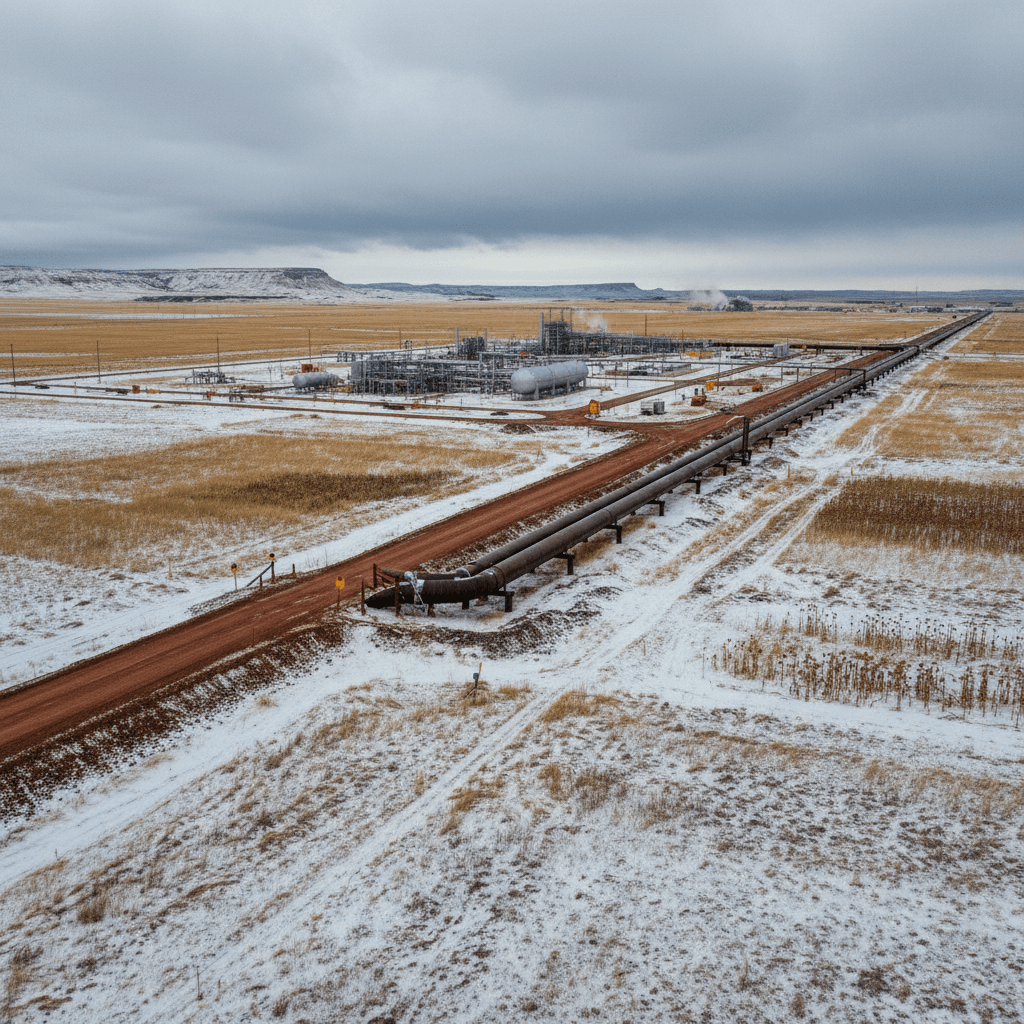
North Dakota Oil Output Steady, Global Pipeline Impacts Unclear Amid Conflict
State data shows pre-war production meeting forecasts, while global supply shifts from Norway and UK regulatory changes add to market uncertainty.
North Dakota oil production held near state budget forecasts in February, but the full impact of the ongoing U.S. and Iran conflict on prices and future output remains unknown, according to state officials. The North Dakota Department of Mineral Resources reported February production at 1.129 million barrels per day (bpd), slightly below the state's budget forecast of 1.15 million bpd.
Director Nathan Anderson presented the data at the April 21 "Director's Cut" briefing, noting the figures do not yet reflect the price volatility triggered by the war that began February 28. West Texas Intermediate crude was at $87 a barrel during the briefing, far above the state's budgeted price of $59. The February average price was $57.54, putting revenue 2.1% below forecast. "I will note that the next month when we get together and talk through this, that number should increase substantially," Anderson said, according to the Bing News source.
The number of producing wells in the state increased by 171 from January to February, mostly to optimize existing production. Anderson stated that rig counts are not expected to change significantly in the near term, as Bakken operators finalized their 2026 capital budgets before the conflict. "Those operators promised the market that they were going to do a certain amount of activity... and no more," he said. One operator has indicated plans to add a rig in July, while another is considering it.
Internationally, pipeline gas flows from a key European supplier have dipped. Norway, the European Union's top gas supplier, reported its natural gas production fell for a second consecutive month in March 2026, according to Rigzone. Output averaged 12.34 billion cubic feet per day, down 1.6% from February and 0.8% from March 2025. Norway piped 54% of the EU's gas imports in the second quarter of 2025.
Meanwhile, the UK's North Sea Transition Authority (NSTA) is seeking a new Chief Financial Officer, a role with an annual salary of $233,318, as it prepares for potential expanded powers from the government. "This is also a great time to join the NSTA; the government plans to expand our role, giving us enhanced powers and wider responsibilities," the authority said in a statement.
For North Dakota, the future price path is uncertain. Justin Kringstad, director of the North Dakota Pipeline Authority, cited U.S. Energy Information Administration predictions that oil prices could dip below $80 a barrel, but potentially not until 2027. The state's oil and gas production data lags by two months, making real-time assessment of the war's impact difficult. "This is largely dominated by the word volatility. That's the way I would describe pricing over the last 50 days," Anderson concluded.
Source
Bing News, Rigzone